
Why Outdoor Kitchens Have Taken Off
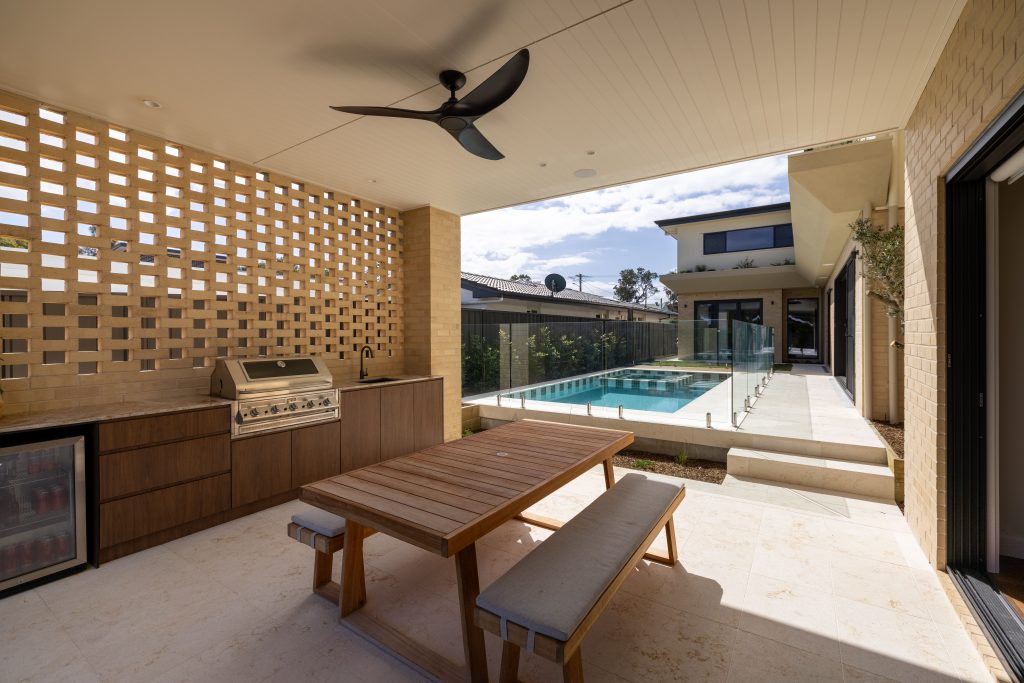
An outdoor kitchen changes how a home is used, particularly through the warmer months. Instead of running back and forth between an indoor kitchen and an outdoor entertaining area, everything you need sits in one place. Prep, cooking, serving and cleanup can all happen outside, which makes entertaining far less disjointed.
There’s also a lifestyle element that matters a lot in this part of the world. A well-designed outdoor kitchen makes the most of a Central Coast climate that genuinely supports outdoor living for much of the year.
Materials That Actually Hold Up Outside
This is where outdoor kitchens differ most from their indoor counterparts. Everyday indoor cabinetry materials generally aren’t built to handle direct sun, rain, humidity and temperature swings, so material choice matters more here than almost anywhere else in the home.
Stone and porcelain benchtops tend to perform well outdoors, since they resist moisture and won’t fade or warp in the sun. Cabinetry needs the same level of consideration. Marine grade materials, powder coated aluminium frames and weather resistant finishes are common choices, and it’s worth asking directly how a proposed material will handle a full year of exposure before committing to it.
Hardware matters too. Hinges, runners and handles all need to be rated for outdoor use, since standard indoor hardware can corrode quickly once it’s exposed to the elements.
Layout Considerations
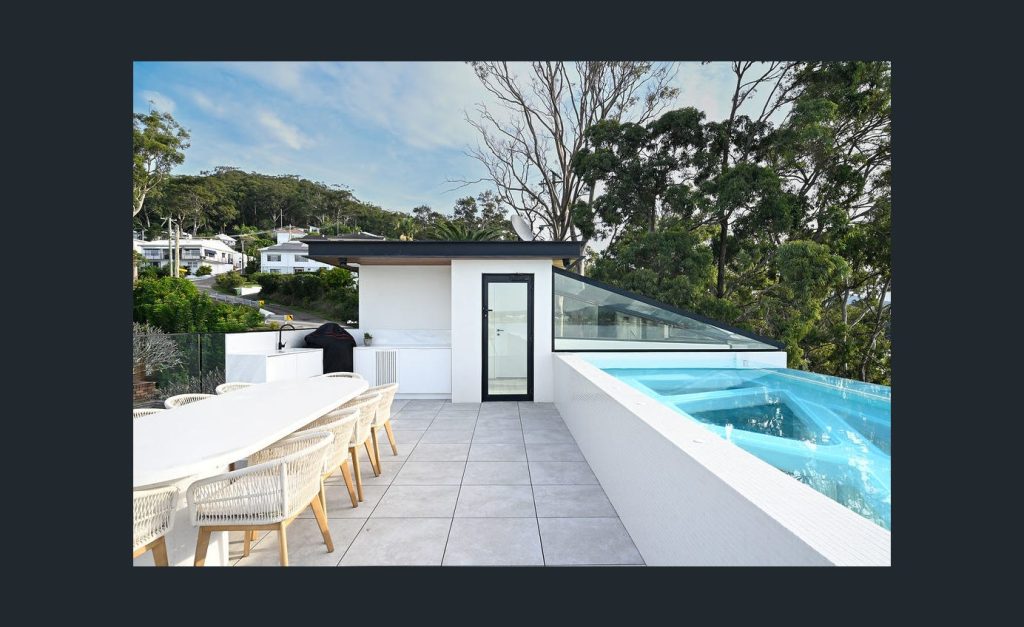
An outdoor kitchen doesn’t need to be a full replica of an indoor one to work well. Many households find that a simplified layout, built around a barbecue or built-in cooktop, a prep bench, some storage and maybe a small sink, covers most of what they actually use.
Position matters as much as material. Think about wind direction, shade through the day, and how close the space sits to the indoor kitchen for carrying food and drinks back and forth. A covered area also extends how often an outdoor kitchen actually gets used, since it protects both the joinery and the people cooking from sun and rain.
What to Include, and What to Skip
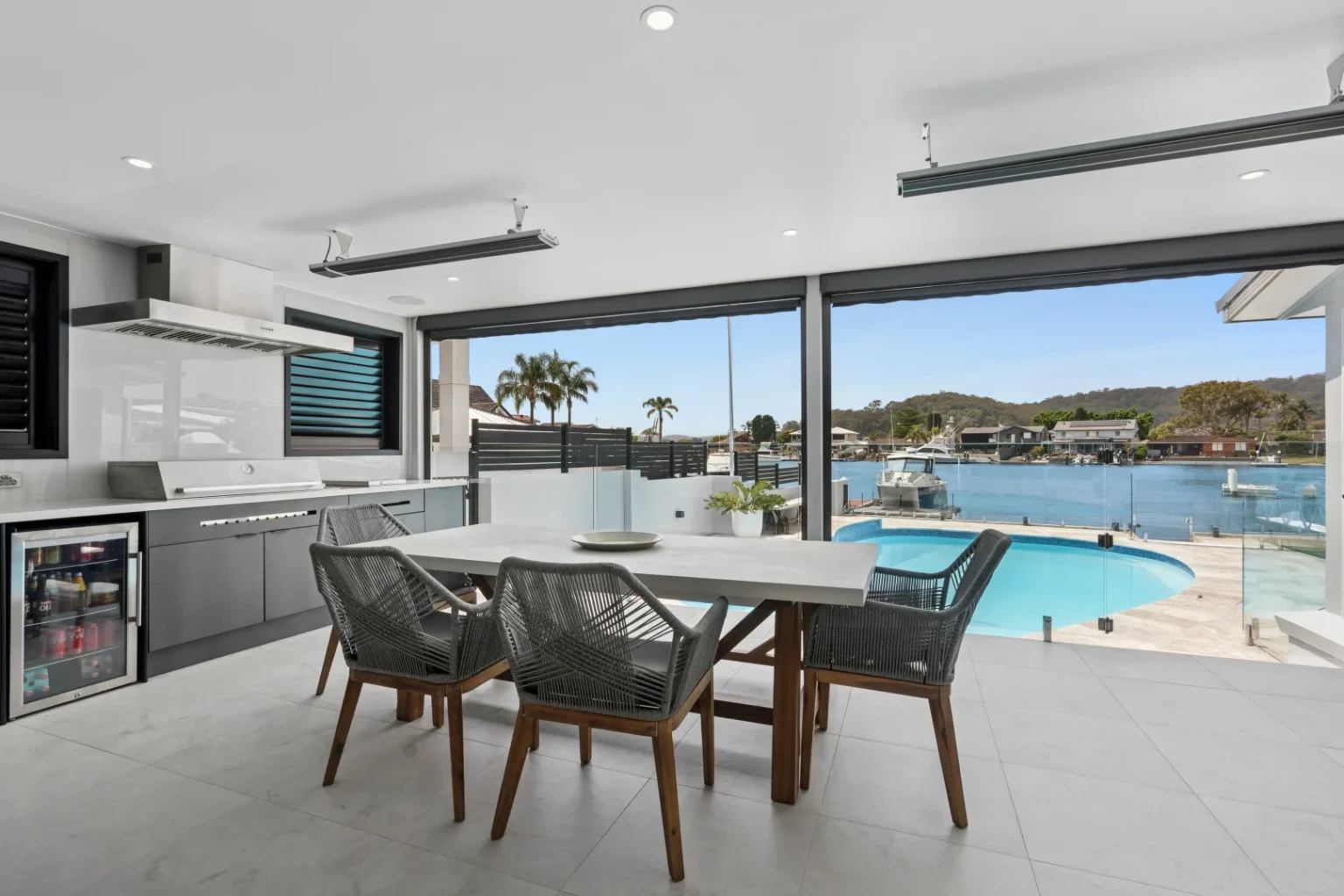
It’s easy to get carried away with inclusions once the idea of an outdoor kitchen takes hold. A pizza oven, a full fridge, a sink, a dishwasher, the list can grow quickly. Before adding everything, it helps to think honestly about how the space will actually be used.
If most of your outdoor cooking revolves around a barbecue and a few drinks with friends, a simpler setup might serve you better than a fully equipped second kitchen that gets used a handful of times a year. If you genuinely entertain often and want the outdoor space to carry real weight, investing in a more complete setup makes sense.
Bringing the Same Design Thinking Outside
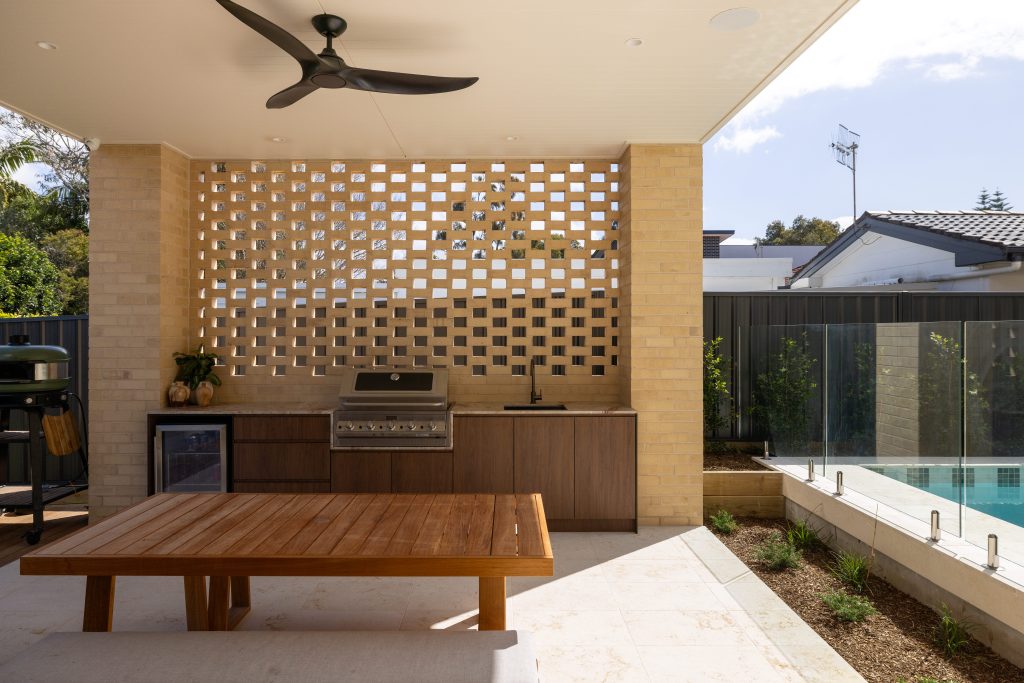
The best outdoor kitchens don’t feel like a separate project from the rest of the home. They pick up on the same materials, colours, or design language used inside, so the two spaces feel connected rather than like an indoor kitchen and an unrelated outdoor add-on.
At Artform Kitchens, we design outdoor kitchens the same way we design indoor ones, starting with how a family actually lives and entertains, then building the joinery around that. We work through material selection, layout, and weather resistance properly before building anything.
If you’re thinking about extending your kitchen outside, come and talk it through with our design team. Visit our West Gosford showroom or get in touch whenever you’re ready.